

“We want half, Mom. Fifteen hundred a month. Starting on the first.”
My daughter Lacey said it standing in the dead center of my living room with her silver car keys still jingling in her hand, like she didn’t plan on staying long enough to take off her shoes or smell the air.
Lacey was forty-four years old. She carried her late father’s sharp, determined chin and not a single drop of his gentle kindness.
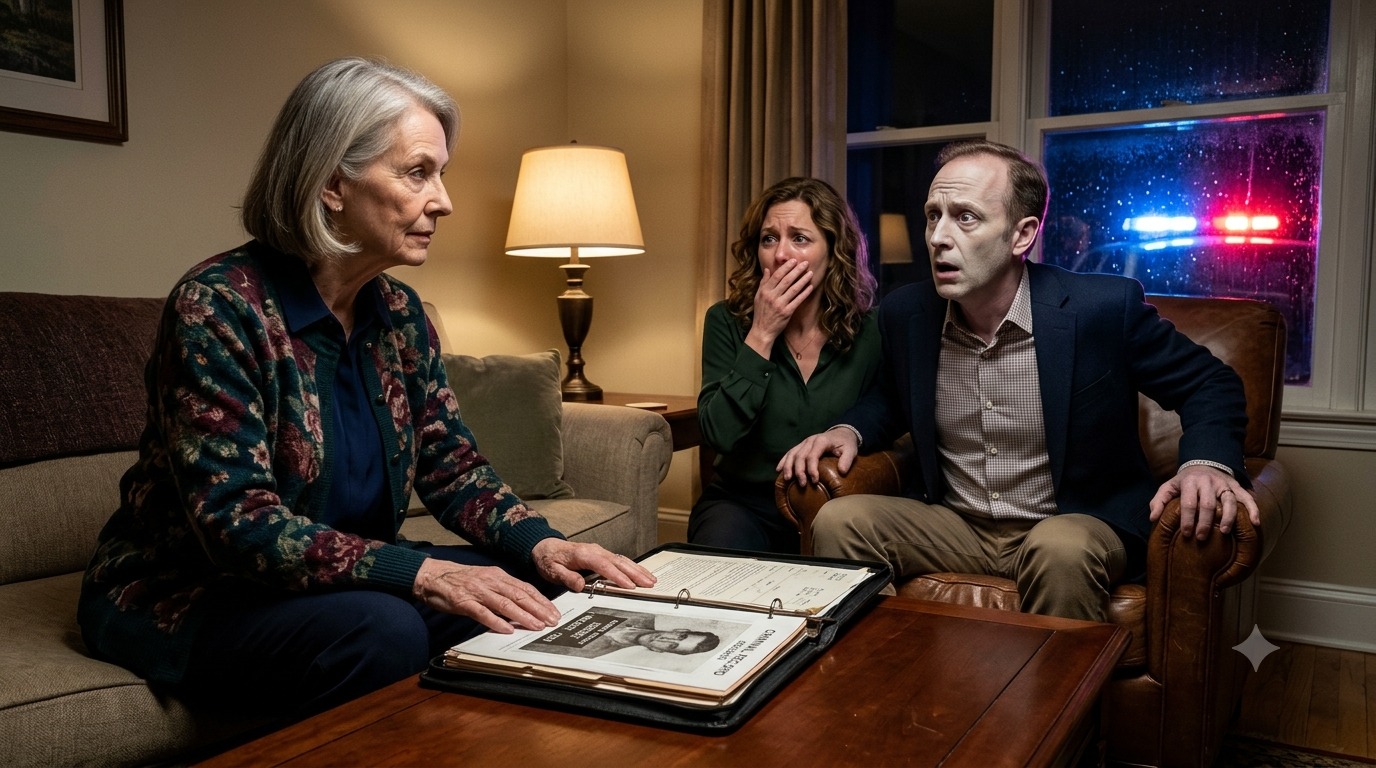
Her husband, Wade, didn’t bother standing. He dropped his heavy frame straight into Gil’s recliner—the worn brown leather chair in the corner that nobody had dared sit in for six years since the morning I found my husband collapsed in our snow-covered driveway. Wade kicked the footrest out with a heavy, mechanical thud, laced his fingers behind his head, and stared at me like a man waiting for a diner waitress to bring him a glass of water.
They hadn’t visited this house since Easter Sunday. They skipped my seventy-first birthday in June. They completely ignored my calls the afternoon I was discharged from Mercy General following full knee-replacement surgery, leaving an old woman to crawl up her own front porch steps on her hands and knees because nobody in this county picked up the phone.
But three weeks after the state public employees retirement board finally corrected a bureaucratic clerical error and began depositing the full, unadjusted pension I had earned over thirty-six years of driving school bus number 14 through winter blizzards, there they were.
Standing on my carpet. With an exact dollar figure already carved out.
“It’s three grand a month, Joan,” Wade said, using my first name in that slick, condescending drawl he always pulled out when he wanted me to feel like a child in my own house. “You don’t travel. You don’t buy clothes. You heat up a can of chicken noodle soup and sit in the dark watching game shows. What are you going to do with three thousand dollars every four weeks? Take it to the grave with Gil?”
Lacey didn’t flinch. She didn’t look embarrassed. She stared at me with the flat, calculating gaze of someone tapping the glass on a vending machine that had swallowed her dollar.
“We’ve been shouldering an enormous financial load, Mom,” Lacey chimed in, crossing her arms over her chest. “And honestly, after everything Wade has done around this place to keep you functional, handing over half is the bare minimum you owe us.”
Everything Wade had done for me.
A cold, bitter laughter rose in the back of my throat. I didn’t shout. I didn’t reach for a handkerchief.
Instead, I smoothed the floral fabric of my trousers over my aching knees, nodded with slow, deliberate rhythm, and reached down beneath the oak side table.
My hands closed around the spine of the black three-ring binder I had been constructing for seventy-four consecutive days. It was two inches thick, reinforced with metal corners, and packed with color-coded divider tabs.
I set it down on the glass coffee table between us with a dull, heavy slap and slid it across the surface until it touched the toes of Lacey’s ankle boots.
“Before we negotiate a single penny of my pension, Lacey,” I said, my voice dead and quiet as an empty church, “I need you to open that cover. Read every line. Don’t skip a word.”
Wade let out a sharp, mocking snort through his nose. “What’s that, your revised funeral instructions?”
“No, Wade,” I replied, meeting his smirking eyes. “It’s yours.”
Lacey frowned, her thumb catching the edge of the vinyl cover.
She opened to Page 1. Her eyebrows knit together in confusion.
Then she turned to Page 2.
I wasn’t looking at my daughter anymore. My eyes were locked onto her husband.
Because the second Wade leaned forward from the leather cushions and caught sight of the glossy eight-by-ten church directory photograph paper-clipped to the header of that page, every drop of blood drained from his face in a single heartbeat. His jaw went slack, his lips turning the pale, sickly color of wet chalk.
He recognized that photograph. He knew that name.
And in that freezing second, Wade realized that the seventy-one-year-old widow he had treated like a helpless, senile target had reached back eleven years into the dark and dragged his real name into the light.
To understand how a predator like Wade Kerrigan managed to sink his claws into my life, you have to understand the family that Gil and I spent forty-three years building on Linden Street.
Gil died six years ago this coming March. A massive coronary on the asphalt of our driveway. He was sixty-nine years old, shoveling eight inches of wet, heavy lake-effect snow because he was too stubborn to pay the neighbor’s teenage boy twenty dollars to clear the berm. I found him lying beside the front bumper of our truck, his woolen mittens still frozen to the fiberglass handle of the shovel.
We had two children: our oldest boy, Owen, and Lacey, who came four years later. We bought our modest, single-story red brick ranch in 1981, paying off the thirty-year mortgage the exact same summer Owen received his high school diploma.
Gil worked thirty-one years down at the municipal water treatment facility, his boots permanently smelling of chlorine and wet river limestone. I spent thirty-six years behind the oversized steering wheel of yellow bus number 14 for the county consolidated school district.
Every morning at 5:15 AM, through freezing sleet and pitch-black farm roads, I pre-tripped that thirty-eight-foot diesel rig. I knew every pothole on County Road 9; I knew which children had peanut allergies; and I kept a secret box of granola bars behind the driver’s partition for the kids whose parents were too drunk or too broken to put breakfast on the kitchen table.
It wasn’t a glamorous existence. My lumbar spine is fused with titanium screws, and my knees throb whenever a low-pressure front blows in from the west. But that state pension was our sacred covenant: it was the labor that was supposed to allow Gil and me to grow old with our boots off, without having to beg a dime from our children or the government.
Owen moved out to Spokane twenty years ago, taking a steady position as a certified industrial maintenance technician at a regional medical center. He married Nadia, a kind, soft-spoken pediatric nurse, and gave me twin grandsons who send me hand-drawn pictures of triceratops that still cover my refrigerator door.
Owen calls my landline every Sunday afternoon at four o’clock sharp. If I mention that my hip is stiff, he remembers to ask about the physical therapy exercises seven days later. He has never asked me for a dollar in his adult life.
Lacey stayed right here in town.
I used to foolishly thank God for that. But the bitter truth is that Lacey was born with a hole in her spirit that no amount of maternal devotion could ever fill. She was perpetually the child who required rescuing.
At nineteen, she totaled my Buick sedan on an unlit gravel curve while texting, and I lied to the state farm adjuster, telling them I had swerved to avoid a white-tailed deer. At twenty-six, she ran up eleven thousand dollars on a retail department store card she had opened using my forged signature and my social security number; the fraud only surfaced when a collection attorney called our landline in the middle of Thanksgiving dinner.
Gil had wanted to walk straight down to the county courthouse and file a formal police report.
I wept and begged him not to ruin her record. She cried on the kitchen linoleum, swore on her grandmother’s Bible that she had made a terrible mistake, and promised she would pay every cent back.
I paid the debt. She never reimbursed a nickel.
Gil looked at me over the sink that night and said words that carved themselves into my ribs: “Jo, you can’t love a child into being honest. A crooked tree doesn’t grow straight just because you water it with excuses.”
I thought that was the cruelest thing a father could say about his own daughter. It took me fifteen more years to realize it was the absolute gospel truth.
Lacey met Wade four years after Gil passed away. She brought him to Sunday dinner, glowing like an eighteen-year-old girl. She was forty, recently divorced from an auto mechanic, and convinced she had finally landed a gentleman of stature.
Wade arrived in a pressed oxford shirt, shaking my hand with both of his warm, dry palms, addressing me as “Ma’am” with effortless Southern charm. He noticed the squeaky pantry hinge before he took his coat off and fixed it with a pocket screwdriver. He praised my pot roast three separate times.
When I asked him what kind of business he operated, he smiled with that easy, handsome flash of white teeth and said: “Private logistics consulting, Mrs. Bramley. The kind that keeps the lights on.”
They were married eight months later at a municipal courthouse three counties away.
I wasn’t invited. I learned about my daughter’s wedding from a tagged photograph on Facebook while eating a microwave dinner alone in my kitchen. When I confronted Lacey, she shrugged and told me Wade hated commercial spectacles, adding that it was “their day, not a family reunion.”
I swallowed the humiliation. When you are an aging widow living alone, you swallow an astonishing amount of poison just to keep the phone ringing once a month.
About twelve months into their marriage, Wade began stopping by my house on Tuesday mornings.
At first, my lonely heart welcomed him. My osteoarthritis was flaring in my left knee, and having a strong, capable man around to haul the heavy salt bags down to the water softener and wheel the trash bins to the asphalt felt like a profound blessing.
He would sit at my kitchen table, nursing a mug of black coffee, asking me questions.
Gentle questions. Helpful questions.
“How are the property taxes looking this quarter, Joan?”
“Do you have someone you trust reviewing your utility billing, or are those corporate meters overcharging you?”
“You know, seniors in this township get targeted by offshore wire scams every single week. You really ought to let family put a protective oversight layer on your checking accounts. You can’t trust a soul these days, Joan. Except blood.”
He spoke with such melodic, reassuring warmth. I want you to remember that tone: warm as fresh bread, and cold as a grave beneath the surface.
Then, the small, unsettling anomalies began to multiply.
My mail began arriving with the envelopes already slit open. Wade would casually apologize, claiming he had checked the curbside box so I wouldn’t have to limp down the driveway in the rain, insisting his thumbnail must have caught the seal by accident.
My vinyl checkbook ledger mysteriously migrated from the top drawer of the kitchen cabinet into the back of the hallway desk. My prescription reading glasses—which had lived on the side table by my reading lamp for twenty years—began vanishing, only to reappear in impossible locations: inside the vegetable crisper of the refrigerator, tucked behind the towels in the guest bath, stuffed into the pocket of a winter parka I hadn’t touched since February.
One Tuesday in early September, I opened the silverware drawer to set out forks, and my heart nearly stopped.
Sitting directly inside the compartment alongside the butter knives was my amber plastic bottle of Lisinopril blood pressure medication.
I stood there in the quiet kitchen, my hands trembling violently, clutching that orange plastic cylinder against my ribs, cold sweat trickling down my spine. A dark, suffocating terror gripped my mind: I am losing my sanity. I am turning into my mother during her final two years in the memory care ward.
At that exact second, the floorboard creaked behind me. Wade stepped into the kitchen, carrying an empty coffee mug.
He took in the sight of me holding the medication, his face melting into an expression of infinite, heartbreaking sorrow. He reached out, laid a heavy, comforting hand on my shoulder, and squeezed gently.
“It happens, Joan,” he murmured, his voice soft as down feathers. “Don’t beat yourself up. Aging is cruel to the sharpest minds. That’s exactly why Lacey and I are here. We won’t let you fall through the cracks.”
May God forgive me: I stood there in my own kitchen, looking at the man who was systematically dismantling my reality, and I whispered: “Thank you, Wade. Thank you for watching over me.”
The pension crisis had been brewing for nearly two years.
When I retired from the transportation depot in 2022, the state public employees retirement system had mistakenly processed my paperwork under Tier-2 service parameters, issuing me approximately $1,900 a month instead of the full $3,000 monthly allowance I was statutorily guaranteed by my thirty-six years of certified driving records.
I possessed every single paper paystub going back to September of 1987, neatly filed in a green metal footlocker in my closet. But navigating the state’s automated phone directory required hours on hold, and the tiny four-point font on the supplemental appeals forms was an impenetrable blur to my cataract-clouded eyes.
Wade, of course, stepped in with boundless generosity.
“Don’t you strain yourself with those bureaucratic vultures, Joan,” he insisted, bringing his laptop to the kitchen table over two consecutive evenings. “I’ll handle the submission portal. I’ll put my personal cell phone number down as the primary administrative point of contact so their automated robocalls don’t wake you from your afternoon naps.”
I signed every document where his manicured finger pointed.
When the state board finally validated the service records eighteen months later, issuing an administrative retroactive correction along with a lump-sum back-payment check of $21,418.00, I didn’t tell a soul.
I didn’t keep it secret out of greed; I kept it secret out of a fragile, desperate desire to hold onto one piece of my life that wasn’t subject to family commentary.
What I did not know that morning was that the retirement division had dialed the contact number on file nine days prior to release the deposit notification.
Wade had known about the twenty-one thousand dollars, and the new three-thousand-dollar monthly deposit, more than a week before the envelope even cleared my local post office.
The woman who saved my life was my neighbor, Bev Dunn.
Bev was seventy-three years old, four feet eleven inches of pure Appalachian limestone, and had retired after thirty-five years as the chief deputy clerk of the county probate court. Bev didn’t possess an inside voice, and she had never in her life tolerated a polite lie when an ugly truth needed dissecting.
She walked through my unlocked back door on a rainy Tuesday afternoon in early July to return an aluminum pie tin, and found me sitting at the kitchen table, weeping silently over a cup of cold tea.
She set the pie pan on the counter, marched over, and placed both palms flat on the table. “Joan Marie Bramley, who died?”
“I can’t find my checking ledger, Bev,” I sobbed, feeling utterly broken. “I’ve looked in every drawer three times. I think… I think I need to have Owen look into assisted living.”
Bev snorted, walked straight to the small telephone table in the hallway, lifted a three-week-old stack of supermarket circulars, and pulled the blue vinyl checkbook out from the middle of the pile.
She sat down beside me, opened the register, and began running her thumbnail down the line items.
Suddenly, her thumb stopped. Her head tilted back, her eyes narrowing behind her bifocals.
“Joan,” Bev said, her voice dropping into that razor-sharp clerk’s cadence. “Who wrote check number 4417 on March 12th?”
I wiped my eyes with a paper towel. “I don’t know, Bev. What does it say?”
“It’s made out to ‘CASH’ for six hundred dollars,” Bev read, her voice hardening. “And unless you’ve developed an entirely new handwriting style that slants sixty degrees to the left, you didn’t hold the pen. And look here: check 4421 for eight-fifty, check 4426 for seven-hundred, check 4430 for nine-twenty.”
Within twenty minutes, Bev had bundled me into her Buick and driven me straight to the downtown branch of First Prairie Savings.
The branch manager was Sam Lyle—a quiet, silver-templed man in his early forties who had attended high school with my son Owen. The moment we sat across from his desk, Sam closed his office door, pulled a thick gray accordion folder from his bottom drawer, and exhaled with profound relief.
“Mrs. Bramley,” Sam said gently, “I cannot tell you how thankful I am that you walked through that door today. I have been losing sleep over your accounts for nearly five months.”
He opened the folder and laid the evidentiary nightmare across the glass desktop:
- Over the preceding fourteen months, $9,840.00 in unauthorized checks made out to cash had cleared my primary checking account—every single one endorsed and deposited via an automated deposit terminal located at a convenience store two blocks from Lacey’s apartment.
- Seventeen days earlier, a formal application had been lodged with the bank’s legal compliance department to add an authorized third-party signatory to all my assets under an executed Durable General Power of Attorney.
Sam slid the photocopy of that instrument across the desk to me.
There was my name: Joan M. Bramley.
There was a signature—a stiff, halting scrawl that looked like a clumsy adolescent trying to trace a line through wax paper.
And right beside the signature block was the execution date: October 11th.
I stared at those typed numbers until my vision doubled.
On October 11th of the previous autumn, I had been wheeled into Surgical Suite 4 at Mercy General Hospital at 7:15 in the morning. I was placed under full general anesthesia until 12:45 PM for an invasive left-knee arthroplasty, spending the remainder of that day in the post-operative recovery unit so heavily medicated on intravenous hydromorphone that I couldn’t have written my own initials on a napkin.
I had been unconscious with my knee split to the bone on the very day a certified notary had allegedly verified my identity in an office across town.
“The only reason this power of attorney wasn’t processed against your accounts two weeks ago, Mrs. Bramley,” Sam explained, tapping the paper, “is because our corporate software caught a mismatch: the notary public commission number typed beneath the seal did not exist in the state registry. It was a counterfeit stamp.”
Sam leaned forward, folding his hands.
“Under state law, I am an affirmative mandatory reporter. I am required to transmit a formal referral to Adult Protective Services. But as Owen’s friend, Joan, I am begging you: do not say a single syllable to your daughter or her husband until you sit down with a dedicated elder law attorney.”
The office of attorney Ruth Okafor sat on the second floor above an artisan bakery on Main Street. The entire stairwell smelled of warm sourdough, ground cardamom, and rising yeast—a domestic comfort that stood in horrific contrast to the warfare we were organizing upstairs.
Ruth was fifty-eight, with silver-threaded braids swept into an elegant crown, dark eyes that missed nothing, and the quiet, immovable posture of a woman who had spent twenty-two years dismantling family predators.
She spent forty-five minutes reviewing Sam Lyle’s banking dossiers and my eleven-page handwritten spiral notebook, where I had documented every displaced medication bottle, every missing pair of glasses, and every opened envelope.
When she finished the final page, Ruth took off her reading glasses, set them down with a soft click, and looked at me across the mahogany desk.
“Mrs. Bramley,” Ruth said, her voice rich, calm, and utterly devoid of hesitation. “What you have experienced over the past eighteen months is not a domestic misunderstanding. It is an established, professional predatory playbook.”
She held up three fingers:
“Phase One: Systematic gaslighting. They isolate you from outside counsel, misplace your essential medications, hide your daily items, and manufacture an artificial narrative of dementia so that when you finally voice suspicion, everyone—including your doctor—assumes you are experiencing cognitive decline.
Phase Two: Paper acquisition. They forge signatures while you are medically incapacitated, attempt to secure unmonitored power of attorney, reroute your mail, and gain administrative control over your accounts.
Phase Three: Total asset liquidation. They present the forged documents to the probate court, file an emergency petition for adult conservatorship, have you involuntarily declared legally incompetent, move you into a Medicaid-funded nursing ward, and liquidate your real estate and your pension to fund their personal lives.”
Cold air rushed into my throat. “What do I do, Ruth?”
“We don’t defend, Joan,” Ruth said, a cold, predatory smile touching the corners of her mouth. “We set the counter-trap. We lock your legal perimeter down so tight a fly couldn’t crawl through, we build an evidentiary paper trail so thick no judge in this commonwealth could doubt it, and we let them walk straight into the jaws of their own arrogance.”
That very afternoon, Ruth executed the defensive perimeter:
- The Public Revocation: We drafted and officially recorded a formal, universal Revocation of Any and All Powers of Attorney with the county recorder of deeds, legally extinguishing any past, present, or purported document bearing my name.
- The Fiduciary Wall: I executed a pristine, comprehensive Power of Attorney naming my son, Owen Bramley, as my sole primary fiduciary, with Bev Dunn appointed as the secondary successor. It was witnessed by two independent bank officers, fingerprinted, and notarized under high-security embossed seals.
- The Banking Lock: Sam Lyle moved my checking account to in-person, photo-identification-only transactions. The state retirement board was formally notified to reroute all future $3,000 monthly deposits into a brand-new, private account at an entirely different commercial institution.
- The Medical Bastion: Ruth immediately dispatched me to Dr. Enos Park, the chief geriatric clinical psychologist on the county probate court’s official panel of certified capacity evaluators.
Dr. Park put me through nearly four hours of grueling cognitive, neurological, and psychological testing over two days. She had me draw three-dimensional clock faces at 11:10; she had me balance complex checkbook registers; she tested abstract logic, short-term recall, and spatial reasoning.
At the conclusion of the evaluation, Dr. Park gave me a five-word verbal sequence to memorize: Apple. Table. Penny. River. Blue.
Twenty minutes later, without warning, she asked me for the sequence. I repeated the five words in precise order.
Dr. Park signed a comprehensive, ten-page clinical capacity affidavit confirming that Joan M. Bramley possessed one-hundred-percent decision-making capacity, zero markers of dementia, and an executive working memory functioning in the ninetieth percentile for adults of any age group.
Bev Dunn took the certified document and laminated a copy for my refrigerator door.
The following morning, a priority parcel arrived from Spokane. Inside were two high-definition, micro-aperture security cameras—each disguised as standard USB wall-charger plugs—accompanied by a handwritten note from Owen:
Mom: Plug one in above the kitchen counter near the spice rack. Plug the second in the hallway outlet facing the desk. The feeds link directly to my phone and an encrypted cloud server. I love you. Don’t be afraid. We are taking our family back.
Five days later, the cameras captured their first dividend.
Wade arrived at 11:30 AM on a Tuesday, smiling, carrying a warm rotisserie chicken from the grocery store. I played the part I had rehearsed with Ruth: I greeted him with a tired, distracted smile, poured him coffee, and excused myself to the master bathroom for four minutes to take my morning aspirins.
The hallway camera captured the reality:
The second the bathroom door clicked shut, Wade’s warm smile vanished. He walked straight to the kitchen cabinet above the stove, pulled my Lisinopril bottle from the shelf, and slid it into the back of the silverware drawer under the microwave. Then he glided down the hall to my desk, opened the bottom drawer, neatly extracted two blank checks from the very back of my checkbook ledger, folded them into thirds, and slid them into his leather wallet.
He was softly whistling an old hymn through his teeth.
When I returned, he was seated at the kitchen table, blowing gently on his coffee.
“You holding up alright today, Joan?” he asked, his eyes filled with manufactured concern. “You seem a little foggy around the edges this morning.”
Looking at his handsome, lying face, every maternal instinct I had ever possessed died a quiet, final death.
Two weeks later, the exterior driveway camera caught Lacey.
She stopped by on a Saturday morning, walked straight to my curbside mailbox before even coming to the door, pulled out the official annual envelope from the state retirement board, sat in the front seat of her SUV, slit the envelope open, and photographed every page of the pension adjustment schedule using her smartphone.
Then, she carefully resealed the paper with a strip of double-sided tape, walked up my porch steps, and handed it to me with a kiss on the cheek: “Brought your mail in for you, Mom!”
That was the night I wept until my ribs bruised.
You can steel yourself against a son-in-law who turns out to be a monster. But watching the daughter you carried in your womb treat your life like a carcass to be scavenged is a wound that never completely closes.
Ruth Okafor’s private investigator was a retired county undersheriff named Glenn Ashby—a slow-talking, silver-haired man who wore scuffed roper boots, carried an unlit cigar in his shirt pocket, and documented every detail in a pocket ledger using a 2B pencil.
Nineteen days after taking Wade’s photograph and thumbprint from a water glass I had preserved in a zip-top bag, Glenn walked into Ruth’s office.
He didn’t take a seat. He stood before Ruth’s desk, took off his Stetson hat, and set a single sheet of paper down with the solemn reverence of a deputy delivering an execution warrant.
“Mrs. Bramley,” Glenn said softly, “your son-in-law’s name isn’t Wade Kerrigan.”
The man my daughter had married at that courthouse was born Wayne Edward Tolliver in a rural township in Jasper County, Missouri.
Eleven years earlier, under the name Wayne Tolliver, he had married a woman named Renee Price. Renee’s mother was a seventy-nine-year-old widow named Hazel Price—a retired church organist who lived alone on a pristine, paid-off forty-acre farmstead outside of Joplin.
Within twenty-four months of that wedding:
- Hazel’s life savings of eighty-four thousand dollars had been systematically liquidated via ATM withdrawals.
- Her farm was encumbered by an adjustable-rate commercial reverse mortgage that Hazel later testified to social workers she had zero memory of executing.
- A forged durable power of attorney had been utilized to sell off her late husband’s timber rights to a private consortium.
- And the notary seal on that power of attorney had been executed on a Tuesday afternoon when Hazel was admitted to the intensive care unit with acute bilateral pneumonia.
When the equity was exhausted, Wayne Tolliver placed Hazel into a state-funded convalescent home on Medicaid, where she passed away fourteen months later from respiratory arrest.
Before the county prosecutor in Missouri could finalize an indictment, Wayne drained the remaining joint accounts, abandoned Renee, and vanished across state lines, legally amending his surname to Kerrigan in an obscure Nevada probate registry two years later.
There had been an active, unserved felony warrant for Grand Theft from an Elderly Person and Uttering a Forged Instrument sitting in the national criminal database out of Jasper County, Missouri, for over nine years.
Glenn pulled an old, glossy photograph from a church directory out of his folder.
It showed a slightly younger Wayne Tolliver—sporting a thick mustache he had since shaved—smiling warmly, his arm looped gently through the elbow of a tiny, frail woman with white curls in a lavender Sunday dress.
Hazel Price. Smiling up at him with the exact same trusting, grateful adoration I had carried for two agonizing years.
I had to excuse myself to the hallway. Bev followed me out, wrapping her arm around my trembling shoulders, letting me bury my face in her cardigan until the dry heaves subsided.
When I stepped back into the office, I looked at Glenn. “Does Hazel have family left?”
“A son,” Glenn replied. “Curtis Price. Fifty-eight years old. He drives long-haul freight out of Tulsa, Oklahoma.”
Ruth placed the call right there on speakerphone.
When Ruth identified herself as an attorney in Illinois and explained the circumstances, the line went dead silent for sixty seconds.
Then, this massive, gravel-textured voice broke clean down the middle over the speaker:
“I told them…” Curtis wept, his voice shaking with eleven years of unavenged agony. “I told the sheriff, I told the bank, I told the social workers that man murdered my mama with legal paperwork! Nobody listened! They told me she signed it! They said she was getting senile! She wasn’t senile, ma’am! She did the Sunday crossword puzzle in permanent ink right up until the day that snake moved his boots under her roof!”
Curtis overnighted every document he possessed: the Missouri bank records, the medical files, and the original forged power of attorney from 2013.
When Glenn laid Hazel’s power of attorney directly beside the instrument Wade had submitted to First Prairie Savings, the final nail sealed the coffin:
The notary stamp impressions were identical:
- The exact same fictitious commission number format.
- The exact same typographical misspelling of “Commisioner” with a single ‘s’.
- And in the lower left-hand corner of the circular rubber seal, an identical, microscopic notch where the vulcanized rubber had been chipped by a razor blade.
Wade had used the exact same counterfeit notary stamp to rob two widows in two different states eleven years apart.
Ruth placed the two documents side-by-side inside a clear, double-sided heavy plastic sleeve, tapped the plastic with her gold pen, and smiled with terrifying serenity.
“That,” Ruth whispered, “is Page 2.”
The investigative apparatus moved with lethal, quiet precision.
Gloria Navarro, the senior investigator with Adult Protective Services, partnered directly with Detective Paul Briggs from the sheriff’s financial crimes division. Detective Briggs validated the Jasper County felony warrant, contacted the Missouri state prosecutor to confirm extradition authority, and executed an administrative search on Wade’s telecommunications records.
That search uncovered the final atrocity:
An online pre-application for a $240,000 cash-out reverse mortgage against my home on Linden Street, filed under my name and social security number. Wade’s mobile number was entered as the primary contact, and Lacey was formally designated as my “full-time residential caregiver and authorized legal proxy.”
They hadn’t merely wanted to siphon fifteen hundred dollars a month from my pension.
They were preparing to encumber the home Gil and I had built with our lives, extract two hundred and forty thousand dollars in cash, and leave me facing foreclosure and an involuntary state guardianship when the balloon payments came due.
On Thursday evening at 9:48 PM, my phone chimed on the nightstand. A text from Lacey:
Wade and I are coming over Sunday at 2:00 PM. We need to formalize the financial arrangements. Don’t make other plans.
I forwarded the message to Detective Briggs before the screen even locked.
By 11:00 AM on Sunday morning, the counter-operation was established.
Detective Briggs, an assistant state’s attorney, and a uniformed county deputy named Officer Tess Rowan arrived through my rear alleyway, accompanied by Ruth Okafor.
Detective Briggs fitted a state-approved micro-recorder beneath the second button of my floral cardigan. Then, the entire team crossed through the back gate to Bev Dunn’s house next door, taking up observation behind Bev’s lace dining room curtains.
Bev had brewed two pots of dark coffee and baked two full trays of her famous powdered lemon bars—because Bev fundamentally believed that no legal takedown in American history was ever hindered by good pastry.
I spent the remaining two hours sitting alone in Gil’s brown leather chair, holding the black two-inch binder on my lap.
I didn’t feel rage. I didn’t feel terror.
I felt that deep, immovable serenity a driver feels at the end of a seventy-mile snow route when the chains come off the tires and the bus engine finally ticks silent in the terminal.
At 2:07 PM, Wade’s black pickup truck swung into my driveway, tires crushing the grass on my lawn.
And that brings us back to where this account began: my daughter standing over my rug, jingling her keys, demanding half my retirement, while her con-artist husband stretched his boots across my dead husband’s furniture, telling me I only ate soup.
“Start on Page 1, Lacey,” I repeated, pointing to the binder on the coffee table. “Don’t skip.”
Lacey turned the heavy black cover.
Page 1 was the certified, county-stamped universal revocation of all powers of attorney, coupled with a formal attestation from First Prairie Savings confirming that all my assets had been sequestered into single-signature, in-person accounts that no third-party proxy could touch.
Lacey looked up, her forehead creasing with defensive irritation. “Why would you do something this ridiculous, Mom? Wade has spent months trying to organize your affairs for you!”
“Turn to Page 2, Lacey,” I said softly.
Lacey flipped the divider.
Her mouth opened slightly. She stared at the black-and-white church directory photograph: the younger Wade, the mustache, the gentle hand resting over the arm of the tiny woman in the lavender dress.
Beneath it was Hazel Price’s obituary, the certified extradition warrant from Jasper County, and the forensic side-by-side comparison of the counterfeit notary seals.
“Who… who is this?” Lacey stammered, looking up at her husband. “Wade… why is your face on this document? Who is Wayne Tolliver?”
Wade didn’t answer her.
He was leaning so far forward in Gil’s recliner that the spring-loaded footrest snapped shut beneath him with a violent, metallic CLANG.
The color had drained completely from his face, leaving his skin the shade of wet concrete. His pupils were dilated, his eyes darting frantically across the room as if searching for an invisible camera.
“Where did you get this?” Wade whispered.
The folksy, charismatic son-in-law was gone. His voice had dropped two octaves into a low, menacing rasp.
“Hazel Price’s son sent it to me,” I answered, resting my hands on my knees. “Curtis. He sends you his warmest regards, Wayne.”
Lacey’s head whipped between us, her voice rising into an unsteady shriek. “Wade! What is she talking about?! What is this about Missouri?!”
“Shut your mouth, Lacey!” Wade snapped, never taking his eyes off me. He lunged forward, trying to slap on his old mask of dismissive gaslighting. “It’s garbage! It’s a fabricated civil shakedown from an unhinged family eleven years ago! The charges were dismissed! Babe, look at her! She’s hallucinating! This is the exact dementia we’ve been trying to protect her from!”
“Turn to Page 3, Lacey,” I commanded.
Lacey turned the page with trembling fingers.
Page 3 contained sixteen high-resolution, full-color camera stills:
- Wade reaching into my kitchen cabinet to hide my Lisinopril in the microwave drawer.
- Wade slipping blank checks from my desk into his wallet.
- Wade tampering with my bathroom cabinet.
- And the final frame: Lacey seated in her SUV in my driveway, photographing the opened pension document with her phone before resealing the envelope with tape.
Lacey let out a short, suffocating gasp—a sound like someone who had taken a bare-knuckle punch to the solar plexus.
“You… you put cameras in this house?” she whispered, her voice cracking.
“In my own home,” I replied, looking directly into my daughter’s eyes. “Because my daughter and her husband were methodically gaslighting an old woman so she would believe her mind was rotting, while they forged checks to pay for their lifestyle. You told your brother I was slipping. You told the church ladies I needed supervision. Where did you think that script was coming from, Lacey?”
She couldn’t answer. Her eyes dropped to the floor, her hands shaking so violently she dropped the edge of the binder.
“Turn to Page 4,” I said.
Page 4 held the forged power of attorney dated October 11th, cross-referenced with my certified surgical intake records from Mercy General, signed by my orthopedic surgeon, confirming I was intubated and unconscious under general anesthesia at the precise hour the document was allegedly notarized.
“Turn to Page 5,” I said.
Page 5 was the online reverse mortgage application: $240,000 against 412 Linden Street, with Wade’s phone number and Lacey Bramley designated as the caregiver.
Lacey read her own name typed into the administrative box.
Her hands flew to her mouth. Real tears—ugly, jagged, terrified tears—finally broke through her mascara, streaming down her neck.
“Mom… Mom, I swear to God I didn’t know about the Missouri woman!” Lacey sobbed, dropping to her knees on the rug. “Wade told me the mortgage was an emergency safety measure! He told me you were going to lose the house to online scammers anyway if we didn’t put it in a family trust! He told me the checks were reimbursement for his consulting hours!”
“The checks were deposited at the drive-through ATM two blocks from your apartment, Lacey,” I said, my voice heavy with seventy-four days of grief. “The money went into your joint household checking account. You spent my pension on your car lease.”
Wade exploded out of the recliner.
The chair slammed backward against the drywall with a shuddering crash. He reached across the glass table, his face twisted into a snarl of pure animal fury, and snatched the black binder from Lacey’s lap, hurling it against the fireplace brick.
“This is complete fiction!” Wade roared, stepping toward me, his fists clenched, his veins bulging against his neck. “You are a sick, paranoid, senile old woman! Do you hear me?! No judge in this state is going to believe your lunatic conspiracy theories! We will file for emergency conservatorship tomorrow morning! You will be locked in a secure psychiatric ward before Thanksgiving, and I will personally bulldoze this house to the dirt!”
I didn’t flinch. I didn’t blink.
I reached into the pocket of my cardigan, pulled out a single laminated white card, and held it up between his eyes and mine.
Page 6.
The clinical psychiatric capacity evaluation signed by Dr. Enos Park, dated twenty-one days earlier, bearing the gold seal of the county probate division: ONE HUNDRED PERCENT COGNITIVE ENDURANCE. ZERO IMPAIRMENT.
“Apple,” I whispered into the quiet room. “Table. Penny. River. Blue. I already thought of that three weeks ago, Wayne.”
Wade stared at the doctor’s signature.
He stared at the five words.
And in that singular, quiet second, I watched the calculated mathematical mind of a career con artist realize that the game had not merely ended—the floor had dropped out from beneath his boots.
He didn’t speak. He didn’t offer a defense.
He did the only thing men of his species ever do when their mask is stripped away: he ran.
He lunged across the rug, snatched Lacey’s keys off the sideboard, and tore open the front door.
Wade got exactly one boot onto the concrete of my front porch.
Standing on the top step, his gold badge glinting in the autumn sun, was Detective Paul Briggs.
Flanking him on the walkway was Officer Tess Rowan, her right hand resting firmly on the retention strap of her service sidearm. At the bottom of the steps stood Gloria Navarro, clipboard in hand, while across the lawn, seventy-three-year-old Bev Dunn stood in her house slippers, holding a white ceramic plate piled high with lemon bars like an ancient Celtic shield.
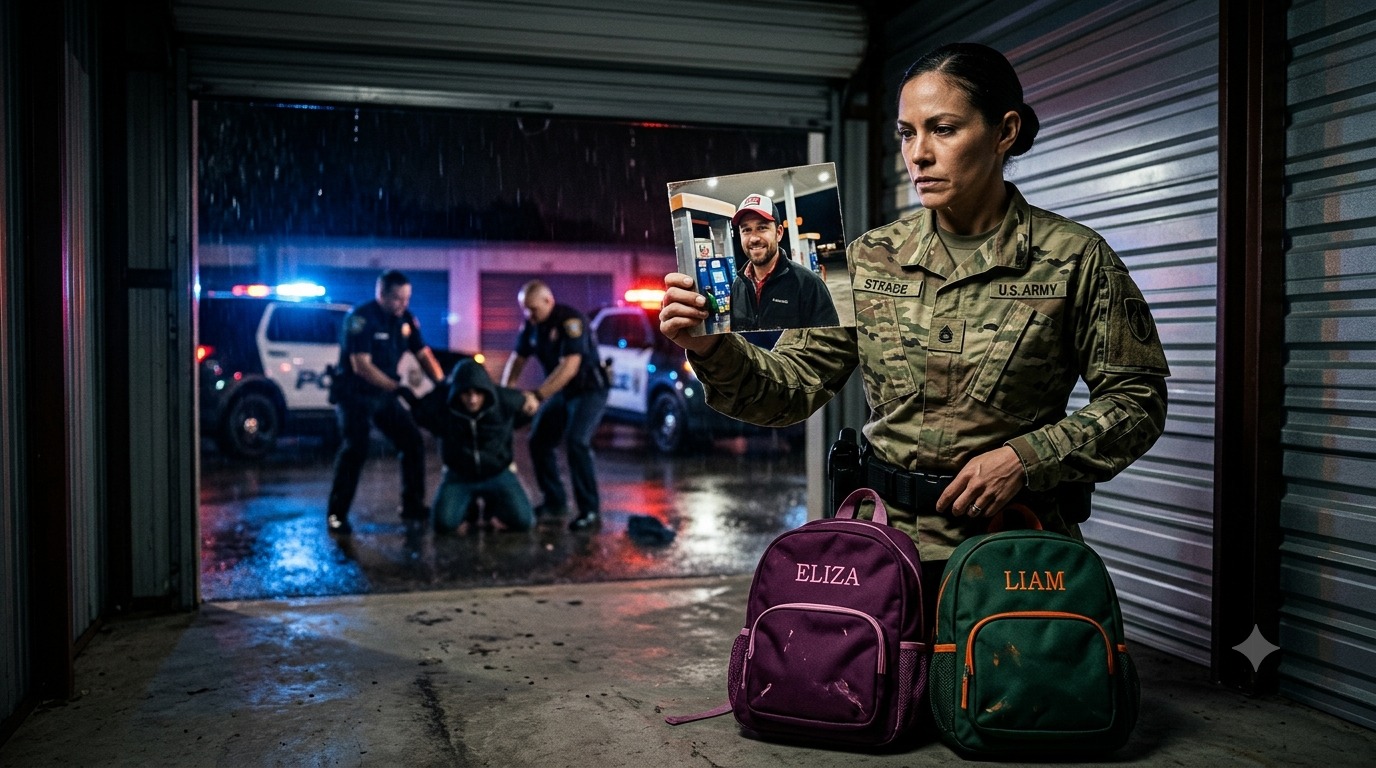
“Wayne Edward Tolliver,” Detective Briggs announced, his voice conversational, calm, and utterly absolute. “Also known as Wade Kerrigan. I hold an active felony warrant for your arrest out of Jasper County, Missouri, for Financial Exploitation of the Elderly and Forgery. Furthermore, you are under arrest in this jurisdiction for Aggravated Identity Fraud, Grand Theft from a Vulnerable Adult, and Uttering a Forged Instrument.”
Wade’s shoulders bunched. For a fraction of a second, his eyes darted toward the truck parked on my lawn.
Officer Rowan took one measured step forward, her hand shifting on her belt. Whatever Wade saw in the eyes of that young deputy made the fight evaporate from his blood.
He turned around slowly, raising his hands into the air.
The steel cuffs clicked shut around his wrists.
It was a small, clean, mechanical sound. I have heard the pneumatic door-brakes on my school bus make louder noises ten thousand times. But standing in my living room, watching the silver steel bite into his skin, it sounded louder than a thunderclap over an open prairie.
“You can’t do this!” Wade shouted over his shoulder, his voice cracking into panic as they marched him down my walkway. “She’s senile! She’s confused! Ask her daughter! Lacey, tell them she’s losing her mind!”
Lacey stood in the open doorway, her mascara running in black rivers down her trembling cheeks, staring at the man she had married.
Every officer on that lawn turned to look at her.
For five agonizing seconds, the world held its breath.
Then Lacey looked at the detective, her voice barely louder than a whisper, but clear enough to cut through the autumn wind:
“Her name is Joan Bramley,” Lacey said. “And my mother has never been confused a single day in her life.”
Gloria Navarro climbed the steps, putting a gentle arm around Lacey’s shoulders, guiding her back into the kitchen.
They sat at the identical table where Lacey used to practice her long division when she was in third grade. For two unbroken hours, while Detective Briggs recorded every syllable, Lacey laid the conspiracy bare: the checks she had endorsed, the envelopes she had stolen from the mailbox, the reverse mortgage documents Wade had coached her to sign, and the relentless lies he had fed her about how her mother was slipping away.
She swore under oath that she had never heard the name Hazel Price until twenty minutes earlier.
Gloria Navarro believed her regarding the Missouri homicide.
The Assistant State’s Attorney, however, did not believe that ignorance absolved her of grand larceny against her own flesh and blood.
Wade Kerrigan was held without bond in the county jail as an extreme interstate flight risk.
Faced with the video surveillance, the forensic notary stamp matches, the surgical records, and Curtis Price’s testimony arriving from Missouri, Wade’s public defender advised him to execute an immediate plea agreement.
He pleaded guilty to two counts of Felony Financial Exploitation of an Elderly Person and one count of Uttering a Forged Instrument, receiving a sentence of eight years in the state penitentiary.
The moment his term concludes, two Missouri state marshals will be waiting at the prison gates to transport Wayne Tolliver back to Jasper County to face the ghost of Hazel Price.
Curtis Price called my landline three days after the sentencing from a freight terminal outside of Kansas City.
The big, burly trucker wept so hard into the receiver he had to pull his rig off the shoulder.
“Nobody believed her, Mrs. Bramley,” Curtis sobbed, his voice cracking with eleven years of vindication. “The whole town thought my mama was losing her wits, and you… you made the law look that monster in the eye. Thank you, ma’am. God bless you.”
Lacey pleaded guilty to one count of Accessory to Theft from a Vulnerable Adult.
Ruth Okafor sat with me when the sentencing recommendations were finalized. I had the power to demand jail time.
I chose not to send my daughter to a cell.
Lacey received five years of intensive criminal probation, mandatory psychological counseling, and a legally binding restitution order requiring her to repay every single cent: the $9,840.00 stolen from my checking account, plus the $11,000.00 credit card balance she had forged when she was twenty-six years old.
She works fifty hours a week as a medical records clerk now, and every first of the month, a cashier’s check for $450.00 arrives in my mailbox via certified mail from the county probation division.
We do not have Sunday dinners. We do not exchange holiday cards.
True forgiveness does not require you to leave your front door unlocked for someone who once tried to burn the house down while you slept.
Today, three months have passed since the black binder did its work.
The winter snow has cleared from Linden Street, leaving the grass green and fresh under the warm April sun.
Owen and Nadia flew in from Spokane for a long weekend with the twins. Yesterday afternoon, Owen and his boys spent three hours in the garage, methodically rebuilding the broken wooden steps leading down to my vegetable garden, their laughter drifting through the open kitchen windows.
I sat on my front porch in Gil’s old rocker, holding a cup of hot coffee with both hands, watching my grandsons chase robins across the lawn.
The letter from the state retirement division arrived yesterday morning, postmarked in clean black ink: my monthly deposit of $3,000.00 cleared into my private account, safe and whole.
I took a slow sip of coffee, feeling the warm spring air against my skin, my knee resting comfortably on the cedar floorboards.
I am seventy-one years old. I drove bus 14 through thirty-six winters of ice, snow, and screaming children, and I never once put that rig into the ditch.
They thought because my hair was silver and my hands were stiff that I was ready to be pushed off the road.
They forgot that a woman who spent forty years holding forty tons of yellow steel on an icy bridge knows exactly how to steer when the storm hits—and she never, ever surrenders the wheel.